About This Event
Explore a solitary volcanic peak standing majestically apart from the Aberdare Range, trekking through indigenous forests, bamboo groves, and expansive moorlands to reach a summit offering spectacular panoramic views of the Great Rift Valley, Lake Naivasha, and distant mountain ranges.
Mount Kipipiri, whose name translates to "butterfly" in Kikuyu—a poetic reference to its distinctive profile when viewed from afar—is an isolated dormant volcano rising prominently on the northwestern edge of the Aberdare ecosystem. Unlike its neighbors in the main Aberdare ridgeline, Kipipiri stands independently at 3,349m above sea level, separated by deeply carved valleys formed by streams draining its flanks.
The journey begins at Geta Forest Station at approximately 2,500m elevation, immediately immersing hikers in thick indigenous forest teeming with giant ferns, mosses, and towering hardwood trees. The initial sections follow tractor tracks used for timber harvesting from lower plantations before transitioning into narrow animal trails winding through increasingly pristine wilderness. Wildlife encounters are common—colobus monkeys swing gracefully through the canopy, Sykes monkeys forage in the understory, while the forest echoes with diverse birdlife including turacos, sunbirds, and occasional glimpses of crowned eagles.
As elevation increases over approximately two hours, the forest character transforms from exotic plantations to magnificent indigenous trees with dense undergrowth. Open meadows begin to appear, carpeted with expansive beds of colorful wildflowers that create stunning photo opportunities. From various vantage points, views open up to reveal the valleys below dotted with farms, houses, and the patchwork quilt of human settlement contrasting beautifully with the wild mountain terrain.
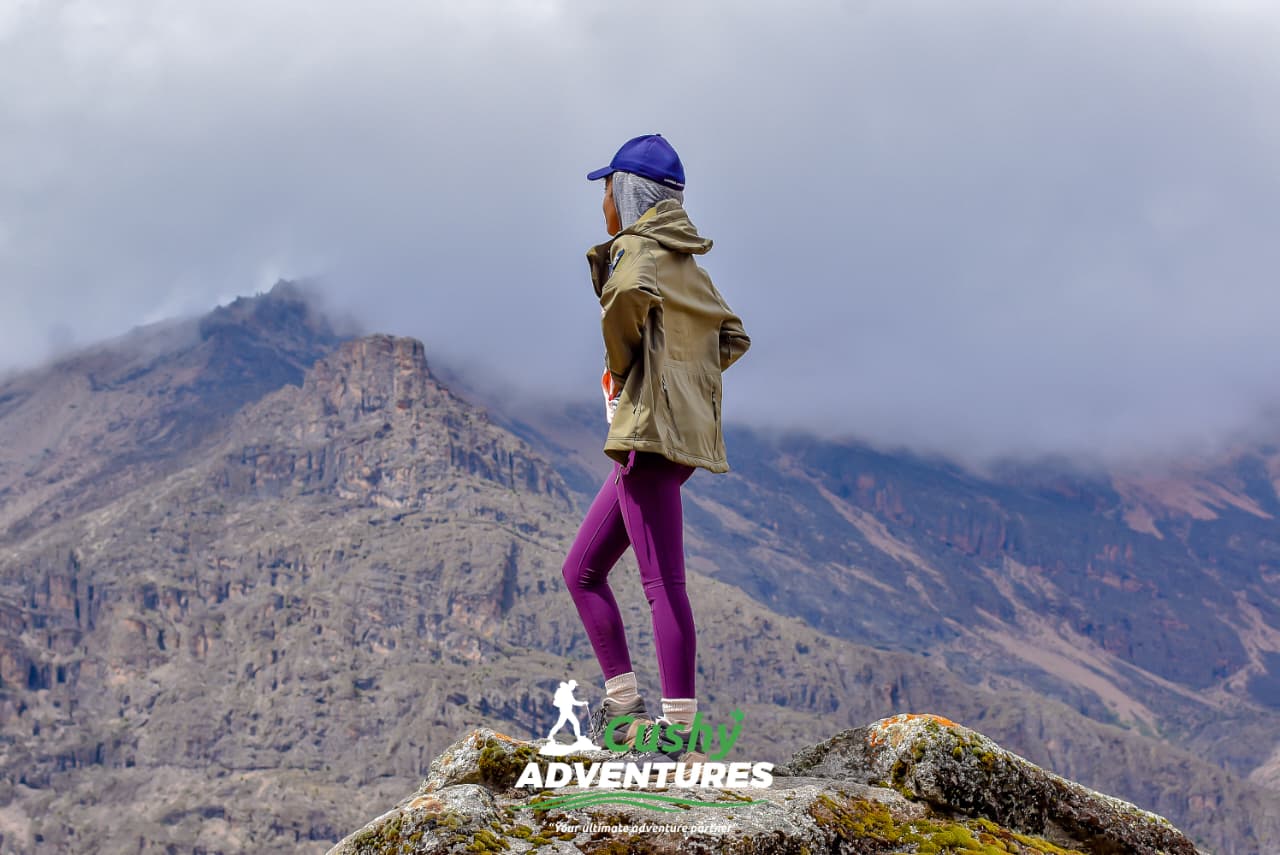
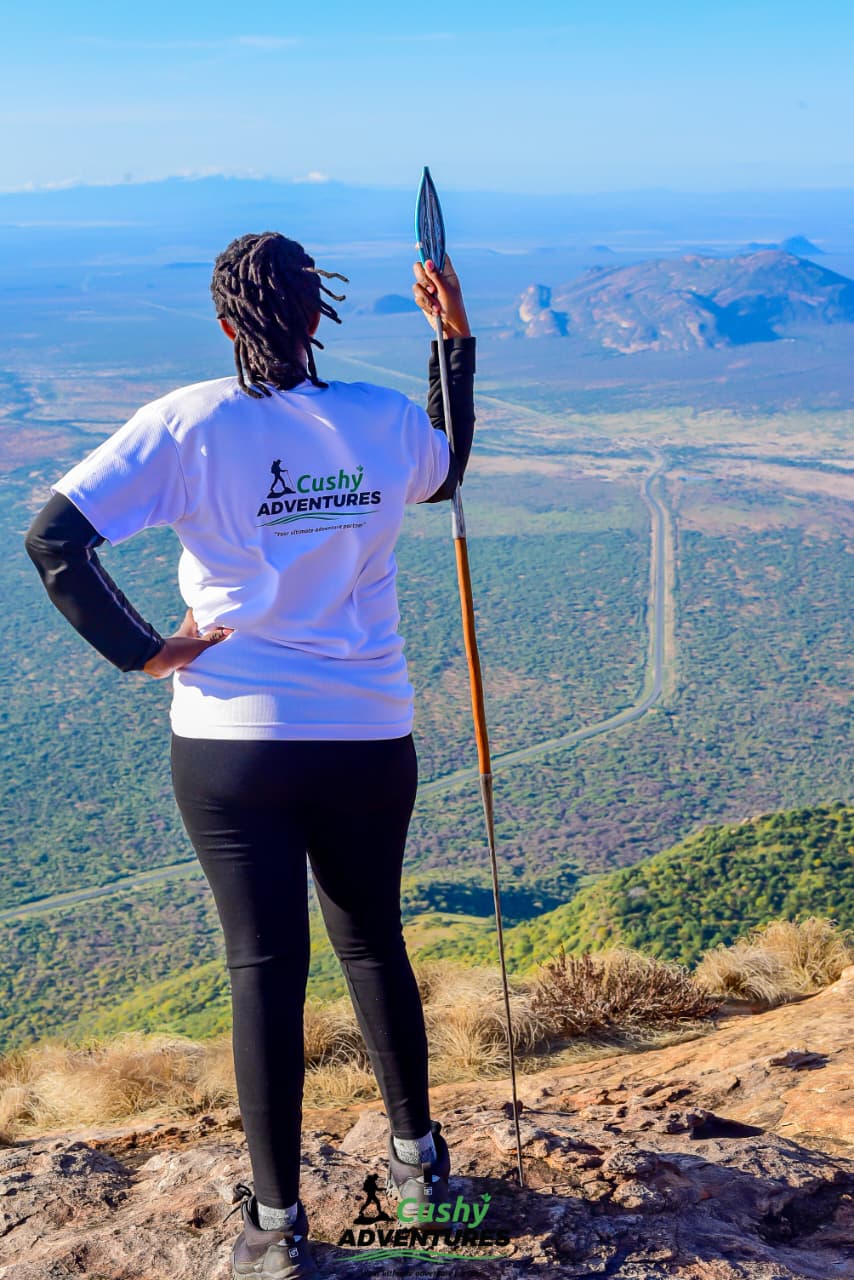
The trail continues through heath vegetation and occasional marshy sections where clumps of tussock grass provide convenient stepping stones across soggy ground. The final approach to the summit involves a steep but rewarding scramble up a conspicuously large rock formation that crowns the peak. Once atop, hikers are rewarded with breathtaking 360-degree panoramas: the shimmering waters of Lake Ol Bolosat sparkle to the north, Lake Naivasha glistens to the west about 32km away, Mount Satima and the main Aberdare Range dominate the eastern horizon, while the famous Wanjohi Valley (historically known as Happy Valley) spreads below, and the Kinangop Plateau stretches endlessly in multiple directions.
The mountain lies within a protected 43 square kilometer forest reserve that forms part of the larger Aberdare National Park ecosystem, complete with electric fencing to preserve its indigenous forests. Approximately 13 elephants and numerous buffalo call this forest home, along with leopards and other elusive wildlife, making an armed ranger escort mandatory for safety.
This moderately challenging hike offers excellent training for aspiring mountaineers preparing for Mount Kenya or Kilimanjaro, combining substantial elevation gain with diverse ecosystems and technical variety. The trail's relative obscurity compared to more popular Aberdare peaks means hikers often enjoy a quieter, more intimate wilderness experience. Weather conditions can change rapidly—expect cold winds, potential fog, and dramatic temperature variations as altitude increases, making proper layered clothing essential year-round.